

[Guest Post by Daisy Luther from The Organic Prepper]
The lower your income is, the more difficult it is to be particular about what you feed your family.
This probably isn’t an earth-shattering revelation to anyone, but if you feel like experimenting, try to buy a week’s worth of healthy food for a family on a budget of, say, $50-75.
Food manufacturers that target lower income shoppers with more affordable products, tend to include more GMOs and toxic ingredients in their offerings. It just isn’t possible to stick to my usual food restrictions. Generally speaking I avoid:

[Image Courtesy of Food Matters]
- Non-organic dairy because of the hormones and antibiotics as well as the GMO feed given to the animals
- Non-organic meat because of the hormones and antibiotics as well as the GMO feed given to the animals
- Anything containing corn, soy, or canola in any form because it is almost certain to be GMO
- Anything with chemical additives like artificial colors, flavors, or preservatives
- Anything that is likely to have been doused in pesticides
- Anything containing neurotoxins like MSG, fluoride, or aspartame (along with other artificial sweeteners)
It is a matter, then, of weighing the pros and cons, and figuring out what things, for you, are the most important, while also deciding which standards can be sacrificed. These decisions will be different for everyone, based on their personal health concerns, their genetic propensity for certain diseases and the members of the family for whom they are buying the food.

The thing that we must all remember is that when times are tough, a person may be down to these two options with a two week grocery budget:
1.) Buy strictly healthy organic foods and feed your family for perhaps 8 out of the 14 days.
2.) Carefully select which standards you will relax to keep the tummies of your family full throughout the wait for the next paycheck.
Very few people are going to choose option one.
Usually, I have an enormous stockpile of non-GMO dried foods and a flourishing garden to serve as a back-up for whatever non-toxic items are being offered at a reasonable price that week. Because I’ve recently moved and am rebuilding my pantry from the ground up, I have no such stockpile right now. I am at the mercy of the food manufacturers.
The Lesser of the Nutritional Evils
So what is a broke, but health-conscious, shopper to eat?
After strongly considering the list above, I decided not to cut corners on the organic dairy, 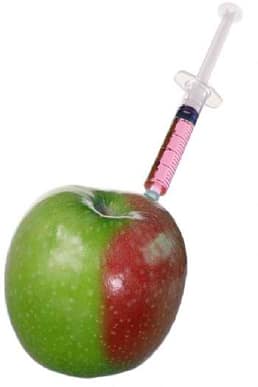 neurotoxins, or the GMOs. I have a growing child and these things are at the top of the toxic pyramid for her development. This isn’t to say that the pesticides aren’t harmful, or the preservatives are not a chemical minefield. In a perfect world, I’d avoid all of it, and you should too.
If you are in a situation where you have to feed your family and don’t have a lot of money to do it, you need to do your research well before looking at those brightly colored packages with the false promises of nutrition within. While this list isn’t comprehensive, here are some things to consider about conventional grocery store offerings.
GMOs: Genetically modified foods have not been tested for long-term effects on humans. There is a great deal of evidence to indicate the GMOs can cause a host of illness. Peer reviewed studies implicate GMOs in the development of grotesque tumors, premature death, organ failure, gastric lesions, liver damage, kidney damage, severe allergic reactions, a viral gene that disrupts human functions…you can read more HERE.
Hormones and antibiotics: Livestock animals that provide meat or dairy products are tainted with growth hormones, antibiotics, and GMO feed. These items pass through the food chain to the consumer. Growth hormones can cause opposite sex characteristics in developing children, early puberty, the development of cancer, and infertility. Furthermore, the world is quickly becoming immune to the effects of antibiotics because of constant exposure through the food supply, which means that there is the potential for things that should be easily treated to become deadly due to antibiotic resistance.
Pesticides: The use of pesticides in conventional farming is rampant. Even the hijacked the Environmental Protection Agency has to admit that the ingestion of pesticides can cause health problems. They warn of the risk of “birth defects, nerve damage, cancer, and other effects that might occur over a long period of time.” (Keep in mind, however, that despite this warning, the EPA just RAISED the acceptable limit of glyphosate at the behest of Monsanto.) Especially at risk of harm from pesticides are prepubescent children and fetuses.
Neurotoxins: Our water supply is spiked with fluoride, a neurotoxin that lowers IQs, causes infertility, has been linked to cancer and causes hardening of the arteries. Nearly every packaged food on the shelf is seasoned with MSG in one of its many names, and many lower calorie foods and diet drinks are sweetened with aspartame. Both of these are excitotoxins that cause brain cell death instantly, causing decreased IQs, headaches, depression, and seizures.
Assorted Chemical Cocktails: The length of the ingredients list in your food is often a direct indicator of the unhealthiness of the item. When an item contains a host of additives, colors, flavors, and preservatives, you can safely bet that most of the nutrients are gone. These highly processed foodlike substances are very difficult for the body to break down so that the few remaining nutrients can be used. If you can’t picture what an ingredient looked like in it’s natural state, it probably isn’t something you really want to eat. When is the last time you saw a tertiary butyl hydroquinone grazing in a field, or a calcium propionate growing in the garden?
What should you eat when you’re broke?
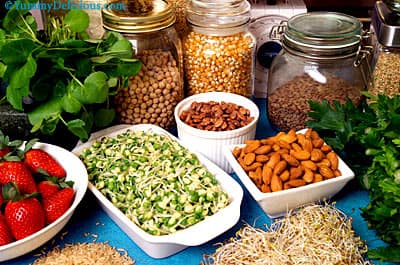
Grains: If you can’t swing organic grains, look for whole grains with few or no additives.
- Wheat flour
- Brown rice
- Pasta (with recognizable ingredients)
- Couscous
- Quinoa
- Barley
Meats: If you can’t afford grass-fed organic meat, at the very least look for options that are guaranteed to be hormone and antibiotic free. The USDA does not allow the use of growth hormones in pork, which makes it a slightly better option.
For Part 2 of this Article Click Here.
_____________________________________________________________________________
 Daisy Luther is a freelance writer and editor who lives on a small organic farm in the Pacific Northwestern area of the United States. On her website, The Organic Prepper, Daisy writes about healthy prepping, homesteading adventures and the pursuit of liberty and food freedom.
You can follow her on Facebook, Pinterest, and Twitter, and you can email her at: daisy@theorganicprepper.ca
You might be interested in:
You know how you’re never sure what ...
"Every School should teach Gar...
 English