
[Guest Post by Patricia Evans]
Are you among those people who feel uncontrollably drowsy during the day, but when you try to close your eyes at night, you just can’t fall asleep even after you’ve already counted all the sheep? When this happens, how many times have you blamed your “messed up body clock?”
The circadian rhythm, also known as a person’s internal body clock, is believed to regulate the 24 hour cycle of biological processes including hormone production, brain wave activity, cell regeneration, and other activities such as sleeping. The body clock is known to play a huge role in determining sleeping patterns, particularly when a person should sleep and wake up.
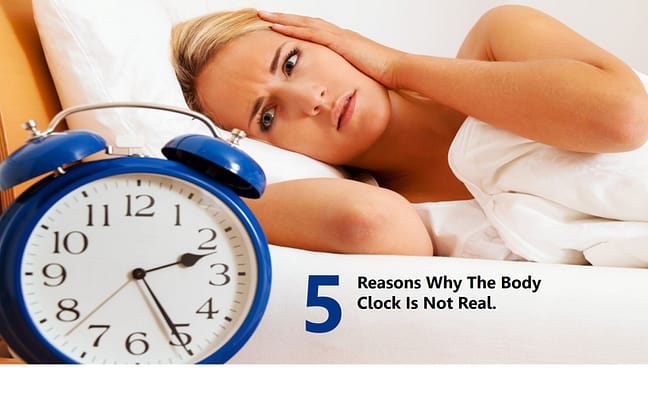
This is probably not the first time that you’ve heard about the circadian rhythm, but does it really exist? Does it really matter or does the problem lie in the very way that we live our daily life? Here are 5 reasons why a body clock may not be real after all—and why you should stop blaming it for your erratic sleeping patterns and start focusing on fixing what needs to be fixed.
- You’re Simply Stressed.

Everyone goes through stress every day. Actually, a certain amount of stress is normal, be it at work or at home. However, anything in excess isn’t good, stress included. According to a 2014 American Psychological Association (APA) Survey, 72% of American adults report feeling stressed about money at least some of the time [1]. The Anxiety and Depression Association of America also stated that 72% of people who have daily stress and anxiety say it interferes with their lives at least moderately, while 40% experience persistent stress or excessive anxiety every day.
Given these figures, it is highly likely that you also deal with stress on a daily basis. Aside from affecting normal functioning and productivity, it can also impact your sleep patterns and habits in a number of ways, including the following:
- It can make you feel restless. As reported by the APA, 43% of adults state that stress causes them to toss and turn and lie awake at night, while over 50% report feeling sluggish after a night of little sleep.
- It can affect quality of sleep. Even if you are able to fall asleep, stress can still affect the quality of your sleep, causing what is called shallow or light sleep.
- It can increase insomnia risk. People who experience ongoing stress are more susceptible to insomnia, often robbing you of sleep entirely. For an App to help with Insomnia, Click Here.
- Stress can send your brain into overdrive. According to David Spiegel, M.D., director of the Center on Stress and Health at Stanford University, stress can keep your brain and body hyperactive, leaving you wide awake at night.
Stress can also create an unhealthy cycle. If you’re not cautious, stress can lead to the development of a vicious cycle that can go on and on: you’re stressed so you can’t sleep, then lack of sleep stresses you more. You may also develop sleep-related unhealthy behaviors such as eating late at night and keeping glued into your electronic device, which can further keep sleepiness at bay.
For a great app to help with Stress, Click here.
- You’re No Longer One.

For many women, pregnancy can be a source of joy and excitement. However, it also brings a number of inconveniences. Besides morning sickness, achy body, and unsatisfied cravings, there’s also sleep disturbance to deal with. Even if you never had sleeping difficulties before, pregnancy can make you experience them whether you like it or not.
With so many physical, emotional, and hormonal changes happening in a woman’s body during pregnancy, it is not surprising that eight out of 10 report insomnia and other sleep problems, and this isn’t even caused by a distraught body clock. Frequent urges to pee, increased heart rate, shortness of breath, leg cramps, backaches, heartburn, and constipation are just some of the common pregnancy symptoms, all of which can wake you up in the middle of the night or may not let you sleep at all.
- You have no choice but to stay up because of work

Did you know that there is such a thing as shift work disorder? It occurs when a person experiences difficulties adjusting to a work schedule that takes place during the night when most people would be asleep.
It is worth noting that not everyone who does shift work has this disorder. It is natural to go through an adjustment stage where you will find it difficult to develop regular sleeping patterns based on your shift schedule at first. But if it goes on for several weeks and starts to disrupt your normal functions, you may be suffering from shift work disorder.
- The drugs don’t work (to help you sleep)

One of the reasons why the biological clock is not ticking properly is medication. If you rely on medications for chronic conditions or even minor ailments, you may end up becoming sleep-deprived and battling daytime sleepiness. Among the drugs that can stop you from fulfilling your longing for better sleep are certain heart, blood pressure, and asthma prescriptions, as well as over the counter medicines for headaches, colds, and allergies.
Chemicals work differently from person to person, however. A number of common medications can keep you from falling asleep while others can make you feel sleepy during the day. Some can affect you, while others won’t. If you think a drug affects your normal sleeping patterns, it’s best to consult your physician and ask for an alternative.
- Change is inevitable

Sudden change in time zone (jet lag), sleeping routine and even your sleeping environment can all affect your ability to get a good night’s sleep. In these cases, you’ll need to make certain adjustments to help your body ease into the changes faster and easier. For instance, if you are traveling to another country or staying at a different room, you may want to mimic your regular sleeping routine and environment. If you are used to taking a warm shower before bed, indulge yourself. If you are using a memory foam mattress at home, ask your host or hotel personnel if you can request for one.
To end off…
By knowing the real causes of sleeping difficulties, you can pinpoint the problem and get rid of unhealthy sleep behaviors, minimize distractions and seek professional help when you need to. Doing so can not only improve your sleeping patterns, it can also boost your productivity and quality of life in general.
____________________________________________________________________________________________________________________________
Author Bio:
 Patricia Evans is an Interior Designer, Residential Designer, Art Crafter, DIYer and a full time mother. She writes about interior decorating, she loves working with shapes, shades and spaces. She is also into green and simple living and loves cooking and having tea.
Source:
1. Stress in America: Paying With Our Health, 2014 survey; American Psychological Association.
2. https://www.sciencedaily.com/terms/circadian_rhythm.htm
3. http://www.webmd.com/sleep-disorders/guide/insomnia-symptoms-and-causes
4. http://stresshealthcenter.stanford.edu/
5. https://sleepfoundation.org/sleep-disorders-problems/shift-work-sleep-disorder-symptoms
You might be interested in:
[Guest Post by STeve Atwell, TSA Coach and Founder...
OsoLean Organic Weight Loss ...
There's Body Control and then There's This... ...
 English